Chapter 14
“All three planets can support life. Two of them have stronger gravity than Earth, requiring mammalian and bird bodies to be more compact. Also, all three planets have low atmospheric pressure and temperatures, which will require further physiological modifications,” Gia assessed the habitability of the three exoplanets. “It is worth noting that two of the planets’ molten cores will not provide adequate protection against harmful radiation from the host star. Even if we could overcome those challenges, we might want to skip one of the planets entirely.”
“How come?” Betty asked.
“It has an unstable orbit. Life on that planet will likely experience catastrophic celestial events every eighty million years.”
“Maybe I can send mirror life there,” Betty smiled.
[redacted]
“Two planets have relatively low oxygen levels. We must first populate the oceans with photosynthetic eukaryotic organisms.”
“I agree. Evolution on Earth could not have happened without the advent of oxygenic photosynthesis,” Betty commented.
“I always admired plants' ability to efficiently convert solar energy into oxygen and fuel. But I found a way to make the chemical process of photosynthesis even more efficient.”
[redacted]
“All complex photosynthetic life on Earth began when a single-celled organism engulfed a photosynthetic bacterium, turning it into an organelle. We must replicate that process, albeit in a much more controlled manner.”
[redacted]
“If fish species survive and reach a minimum viable population thresholds, producing reptiles and amphibians through viral transduction is relatively straightforward. The real challenge lies next,” Gia paused.
“Birds?”
[redacted]
“Apart from physiological elements, there are other factors to consider. For instance, based on the axial tilts and orbital shapes around their host star, two of the planets will likely experience intense climate shifts.”
The Inspiration Behind the Text
I enjoy science fiction. I really do. It sits at the juxtaposition of science and fiction – two subjects I cherish. However, I find that many sci-fi novels and movies lean far too heavily on the fiction. While I understand this appeals to a broader public, I prefer a more subtle yet balanced approach. I remember watching Interstellar and being amazed by its science-based simulation of a black hole. Yet, when the astronaut fell in, I was expecting a spectacular rendition of spaghettification.
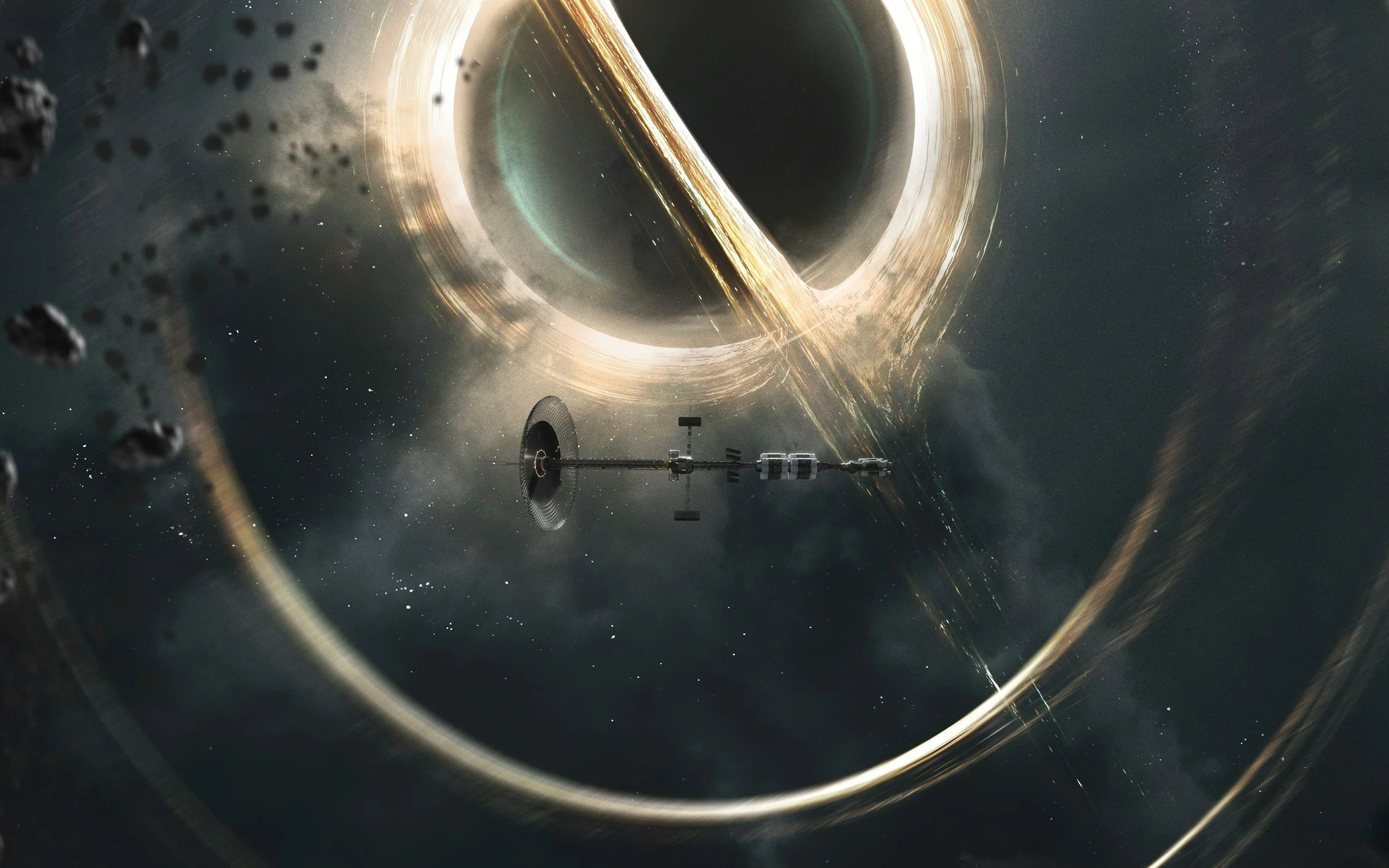
There are numerous movies where interstellar travelers are frozen in cryogenic conditions, but this is simply not possible. Intense radiation from heavy particles would kill astronauts via acute radiation poisoning. In fact, when I solicited a professional opinion from a NASA engineer, he noted that to fully shield a crew from cosmic radiation like Earth’s atmosphere does, the ship would need to be the size of a small moon, wrapped in meters of solid aluminum. Hence, I decided to write a plot where only the seeds of life are transferred to distant exoplanets. And to better understand the evolutionary path of extinct hominins and Homo sapiens, I relied on the pioneering discoveries of Swedish geneticist Svante Pääbo.