The Origin of The Vault
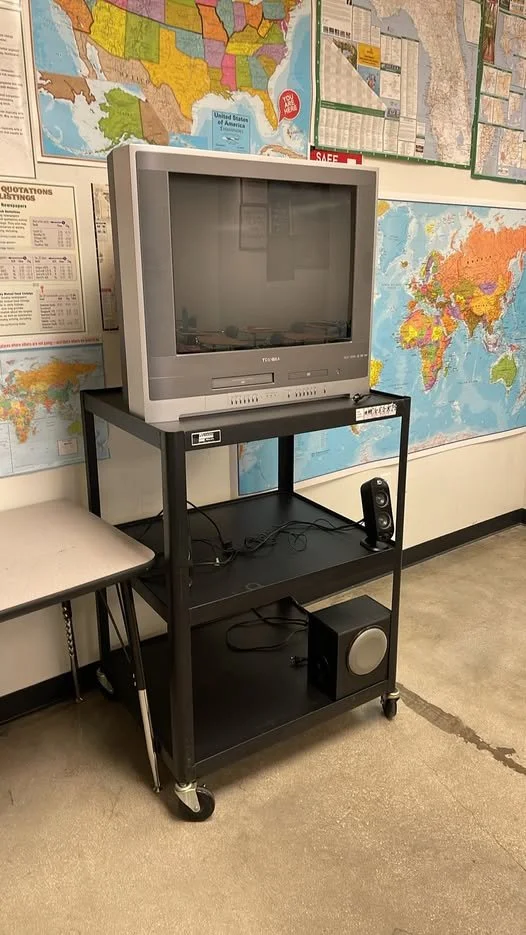
The excitement began brewing the moment Mr. Kert rolled a TV cart into the classroom.
“What be we watching today?” I asked.
No, I was not a pioneer of street cred, I was FOB and spoke broken English.
“The origin of the universe,” the teacher answered.
“Big Bang?” I asked.
Mr. Kert shook his head in disappointment.
As luck would have it, our midterm exam was replaced with an important “documentary” on how the Earth was created and evolved. I mean, what is more important than that? According to the video, our planet, as it turned out, was only a few thousand years old. A fossilized hat proved that geological events could happen in an extremely compressed timeline.
As devout soldiers of our religious faith, we were taught to repudiate ill-informed scientific inquiries with biblical teachings and prayers. If this method didn’t work, we were taught to take out the big gun. That’s right – Ken Ham’s famous phrase, “Were. You. There?” It was important to emphasize each word and say the phrase in an accusatory tone. Most importantly, we were encouraged to adopt a scholarly British accent. So, it came out more like: “Wuh! Yu! De-yah!”
Sensing my ambivalent attitude toward young Earth creationism, a respected classmate walked over to talk to me. I told him that I believed the Earth was billions of years old; otherwise, how could we see the stars that are billions of light years away? He responded with an honest, “I don’t know”, but said he would think about the problem. The following Monday, he explained that he was able to reconcile the apparent contradiction. His take on the young universe theory was quite intriguing.
He said, just as God created Adam and Eve as mature adults, God also created an “adult” universe with light already propagated throughout the spacetime continuum. I liked his theory; not because it made sense to me, but because it was original. I had never heard anything like it before. I thought it was as good as any other faith-based explanations. Perhaps there is an optimal entropic level where the collective perception of negentropic organisms is maximized. I found his thought experiment just as entertaining as the uniform start (i.e., low entropy) of the inflationary cosmology theory.
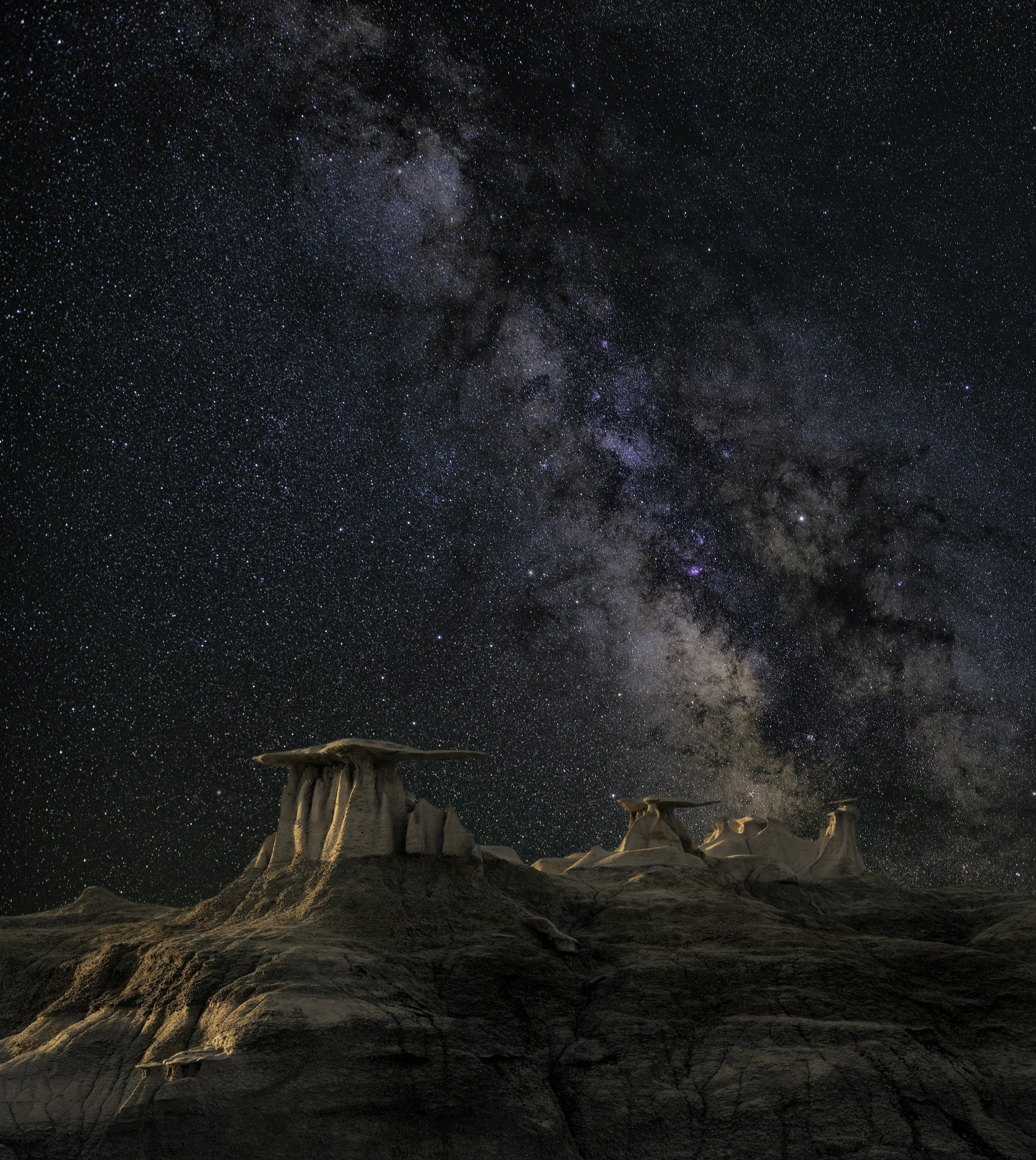
My youthful fascination was never about choosing a side in the tug-of-war between religious zealotry and dogmatic atheism. Instead, what I personally found interesting about the theory of the “full-grown” universe wasn’t its theological content or the mechanics of photon propagation. Instead, I was fascinated by how we absorb new information through the lens of our dearly held beliefs. This process closely parallels how AI infers conclusions:
Artificial intelligence models do not weigh all new information equally; instead, they assign distinct, customized importance scores to different inputs based on their underlying architecture and context.
Gemini, response to "Does AI weigh all new information the same," August 22, 2026.
In the case of my classmate, his rigid belief in a young universe dictated how he processed a new, conflicting data point – the journey of ancient photons. Inspired by his character and inquisitive mind, I was left with a humbling question: how are my own hidden priors subtly shaping my perception of the world?
That question slowly morphed into “what stories does our subconscious mind weave and how do those narratives mold our perception of the world?” This eventually became the basis of a recurring theme in The Vault.
“The compartmentalization of specialized functions certainly lowers energy requirements. However, the downside of such remarkable efficiency is information distortion. Furthermore, this effect is often magnified in the presence of vague yet intense emotion. For instance, the feeling of loneliness can be misinterpreted by the cognitive processing unit and classified as a general pain, causing the distressed person to choose counterproductive remedies instead of alleviating the undesirable condition [redacted],” Gia explained.
Chapter 18, The Vault
For over twenty years, I catalogued such questions and the concepts I found interesting. When I decided to use them as a scaffold for my novel, a subtle yet unmistakable paradox emerged: the deeper I sought to answer my questions, the more questions appeared before me.
While I do not know the exact source of these ever-growing questions, long-dormant memories roared back to life to help me address them. The process of writing has been a deeply fascinating and life-affirming experience.
As personal as the novel is, The Vault is not about me; rather, it is an exploration of the questions I accumulated and a testament to the importance of individuals finding their own.
“It’s the question that drives us, Neo.” (Trinity, The Matrix)
My hope is that The Vault is not a page-turner. Rather, I hope it serves as a clean mirror – encouraging readers to close the book, step away, and reflect deeply on their lives and purpose.